
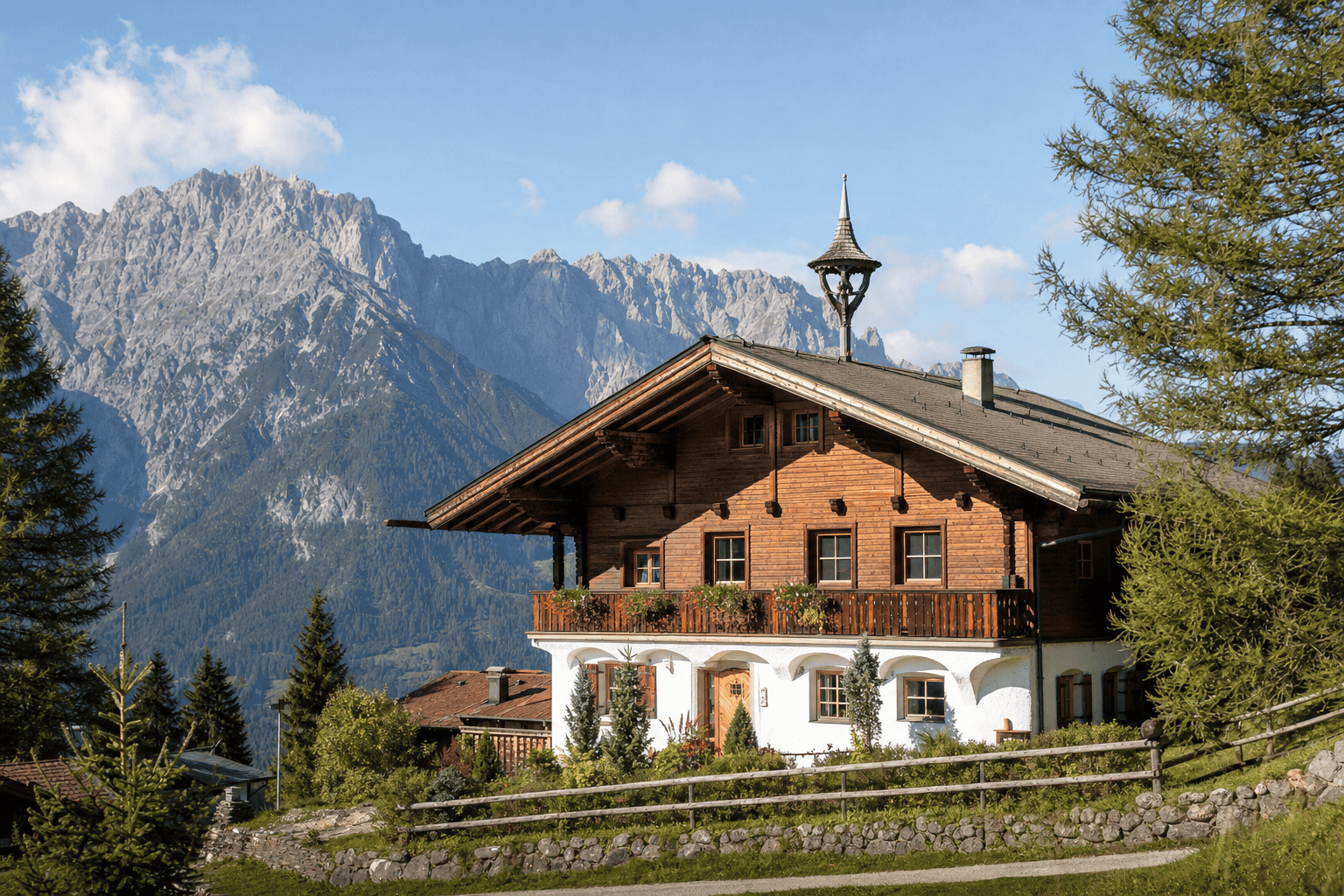

A recreational residence in Tyrol is a topic of particular relevance owing to the picturesque Alpine landscapes and the popular holiday regions that attract numerous tourists every year. Despite the many advantages that a recreational residence offers, the legal framework conditions, especially in Tyrol, are complex and subject to numerous restrictions. In this article, as attorney (Rechtsanwalt) Innsbruck, we take a look at the five essential legal challenges to be observed when acquiring and using a recreational residence in Tyrol.
What exactly is meant by a recreational residence in Tyrol?
According to the Tyrolean Spatial Planning Act (Tiroler Raumordnungsgesetz, TROG), a recreational residence is a property that does not serve the year-round residential need connected with the centre of a person’s life relationships, but is used only temporarily – for example during holidays or weekend stays – for recreational purposes. This definition is particularly important, as the use of a property as a recreational residence is subject to stricter regulation than its use as a primary residence.
Why is Tyrol such an attractive location for a recreational residence?
Tyrol offers a wide range of leisure opportunities that make it an attractive location for the acquisition of holiday properties. Whether the first-class ski resorts in winter or the hiking trails and cycling routes in summer – the region offers numerous recreational possibilities at every time of year. Added to this are the charming culture, the traditions and the excellent gastronomy, which make a stay at a recreational residence in Tyrol all the more enjoyable.
Legal Framework Conditions and Restrictions
Despite the many advantages that a recreational residence in Tyrol offers, there are considerable legal restrictions. Tyrolean spatial planning pursues the objective of steering the spatial development of the region and preventing residential space from being increasingly displaced by holiday properties. This is of particular significance in view of the high property prices and the growing demand from tourists and foreign buyers.
The Tyrolean Spatial Planning Act (Tiroler Raumordnungsgesetz) sets clear limits on the establishment of new recreational residences. The creation of new recreational residences is only permissible under certain conditions. One essential point is that the number of recreational residences in a municipality must not exceed 8% of the total number of all dwellings. In areas with high demand for residential space for local residents, as is the case in many Tyrolean municipalities, approval for recreational residences is frequently refused in order to prevent the development of “ghost villages” that are inhabited only during the holiday season.
Property Transfer Law and Acquisition by Foreign Nationals
Another important legal element is property transfer law (Grundverkehrsrecht). Whilst the acquisition of property in Tyrol by EU citizens is in principle unproblematic, foreign nationals from non-EU states must apply for official approval for the acquisition of a property. Such purchases are also subject to special conditions when the property is used as a recreational residence.
Penalties for Illegal Use of Recreational Residences
The Tyrolean authorities have increasingly taken action against the illegal use of recreational residences in recent years. Anyone who uses a property as a recreational residence without the necessary approval risks heavy penalties. In some cases, fines of up to 40,000 euros have already been imposed where a property was used contrary to the regulations. The example of a Dutch national who used a flat in the Zillertal as a recreational residence and was fined for doing so illustrates how strictly the authorities now proceed.
Exceptions and Special Provisions
There are, however, also exceptions under which use as a recreational residence is permissible even without the strict regulations applying. For example, certain hospitality businesses, holiday apartments or facilities such as convalescent homes may, under certain conditions, be exempted from the provisions of the TROG. The possibility of an exceptional permit granted by the mayor of the respective municipality also exists, but only subject to very strict conditions.
Conclusion
Acquiring a recreational residence in Tyrol can be a worthwhile investment; however, the legal framework conditions must be observed. Prospective buyers should inform themselves comprehensively about the applicable provisions and, where appropriate, seek legal advice in order to avoid legal pitfalls. Those who meet the requirements and comply with the applicable regulations can, however, enjoy the benefits of a recreational residence in one of the most beautiful regions of Austria. Further information on the legal framework conditions can be found in this article on recreational residences in Tyrol.
Disclaimer
The information provided is general and non-binding legal information that makes no claim to be up to date, complete or correct. All non-binding information is provided exclusively as a public and free service and does not establish a client or advisory relationship. For further information or specific legal advice, please contact our law firm directly. We therefore accept no liability for the topicality, completeness and correctness of the pages and content provided. Any liability claims relating to damage of a non-material or material nature caused by the publication, use or non-use of the information presented or by the publication or use of incorrect or incomplete information are excluded in principle, unless there is demonstrably intentional or grossly negligent conduct.
For further information and to contact us, please refer to the Legal Notice and the Terms of Use & Privacy Policy.